

Apple Siri Review 2026: The New Era of Apple Intelligence
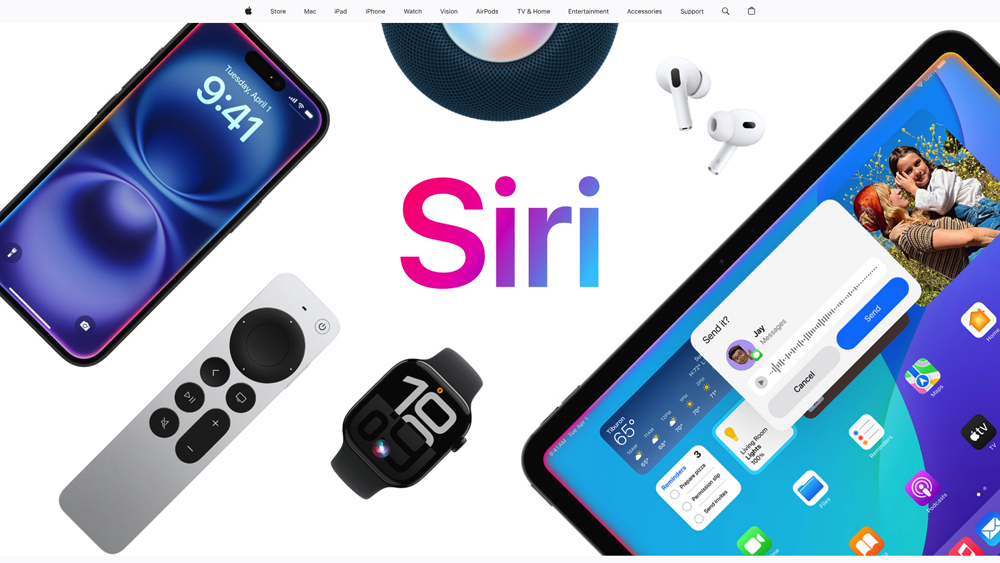
Apple Siri has been transformed from a basic voice assistant into a powerhouse of personal context, driven by Apple Intelligence and seamless GPT-4o integration. It now offers a deeply integrated, privacy-first AI experience across the entire Apple ecosystem. By leveraging on-device processing and Private Cloud Compute, Siri can now perform complex actions across apps, understand personal context like never before, and provide generative assistance while maintaining industry-leading security standards.
In-Depth Review & Model Analysis
The 2026 version of Siri represents a fundamental shift. Rather than just answering questions, Siri now acts as a cross-app orchestrator. We evaluate its performance based on its ability to handle ‘Personal Context’, understanding your emails, messages, and schedules to provide bespoke help, while maintaining Apple’s hallmark privacy standards through on-device intelligence.
Key Takeaways: Pros, Cons & Quick Summary
This summary highlights how Siri stacks up in 2026, focusing on its new generative capabilities and its limitations outside the Apple ecosystem.
Key Advantages (Pros)
- System-Wide Integration: Can take actions inside third-party apps and native Apple apps seamlessly.
- Privacy-First AI: Most processing occurs on-device or via secure Private Cloud Compute.
- GPT-4o Intelligence: Hands off complex world-knowledge queries to ChatGPT with user permission.
- Personal Context: Truly understands who you are, who your family is, and your upcoming plans.
- Writing Tools: Deeply integrated proofreading, rewriting, and summarization across the OS.
Potential Drawbacks (Cons)
- Ecosystem Locked: Maximum features only available to users with the latest Apple hardware (M-series/A17+).
- Hardware Dependent: Older iPhones and Macs lack the NPU power for the full “Apple Intelligence” suite.
- Limited Third-Party Customization: Developers are still constrained by Apple’s strict App Intent frameworks.
Core Features: Personal Context & Apple Intelligence Integration
Siri offers a comprehensive suite of features that evolve constantly, pushing the boundaries of what is possible with a hardware-integrated assistant. We focus on the most impactful features for power users, including personal context awareness, on-device writing tools, and true multi-modal integration with Apple Intelligence.
- App Intents & System-Wide Control: The ability for Siri to take actions across your apps, like finding a photo and sending it to a contact, is a game-changer for specialized mobile and desktop workflows.
- Writing Tools & Smart Summarization: Full system-wide tooling for rewriting, proofreading, and summarizing text in Mail, Messages, and third-party apps directly within the OS environment.
- Multi-modal Personal Context: Seamless support for visual intelligence (understanding what’s on your screen), voice conversation, and semantic indexing, unifying your digital life into one interface.
- Private Cloud Compute: The platform maintains security over complex requests by using server-side processing that is mathematically verified to be as private as on-device data.
- Cross-Device Parity: The iOS, iPadOS, and macOS versions offer nearly 100% feature parity, ensuring your personal assistant is always available and consistent on all your Apple hardware.
Architecture and Apple Intelligence Innovation
Understanding the underlying intelligence (Apple Intelligence, GPT-4o) is critical to assessing performance and creative limits. The innovation within this hybrid architecture directly impacts the quality of generated content, from on-device privacy to creative storytelling.
- Apple Intelligence: Renowned for its unparalleled privacy and personal context, this on-device engine is the backbone for tasks requiring local data access, such as scheduling, summarizing notifications, and basic image generation.
- GPT-4o Integration: This model represents a leap in world knowledge and broad reasoning. Siri can hand off complex global queries to GPT-4o, delivering fast results while maintaining high-quality reasoning for high-volume, real-time interactive tasks.
- Privacy-First Processing: Users benefit from a “Privacy-First” model where broad knowledge requests are stripped of personal identifiers before being sent to external models, which is crucial for maintaining security in an AI-driven era.
Performance, Speed & User Experience (UX)
Performance testing focuses on response latency, personal context accuracy, and Siri’s coherence across various device states. The user experience is rated on its deep OS integration, accessibility, and the quality of the interaction.
- Response Latency: Siri’s latest on-device models achieve near-zero latency for core OS tasks, drastically improving the flow of daily interactions. This responsiveness is a key factor in its high UX score.
- User Interface & Design: The interface is elegantly integrated into the display’s edge, supporting complex functions without a full-screen takeover. The design focuses on minimizing cognitive load, allowing users to interact naturally while staying in their current app.
- Contextual Awareness: The system is robust in handling personal queries that refer to items on your screen or in your history, often clarifying intent based on your actual digital behavior rather than failing, a sign of advanced underlying reasoning and a key UX strength.
Siri & Apple Intelligence: 2026 Value Guide
The latest Apple Intelligence and GPT-4o integration provide “human-level” reasoning for complex personal context, math, and coding. With a vast library of App Intents, natural multimodal interactions, and new Image Playground generation, it remains the most intuitive and secure tool for both everyday Apple users and professional developers.
STANDARD SIRIMost Popular$0
- Price: $0 (Free)
- Model: On-Device LLM
- Core: Standard On-Screen Awareness Plus Basic Voice Controls and Privacy Security
- Best For: Daily iPhone Users and Casual Smart Home Automation Fans
HEALTH+ TIERMost Popular~$9.99
- Price: ~$9.99/mo
- Model: Siri Health Coach
- Core: Predictive Health Vitals Plus Advanced Wellness Data and Fitness Logic
- Best For: Fitness Enthusiasts and Users Monitoring Personal Health Metrics
APPLE ONEMost Popular$37.95
- Price: $37.95/mo
- Model: Premier Intelligence
- Core: Full Intelligence Plus Plus 2TB Storage and All of the Premium Entertainment Options
- Best For: Apple Families and Users Needing Maximum Ecosystem Value
Note: While standard Siri enhancements are included with iOS 26, advanced “Siri 2.0” features, such as cross-app automation and on-screen awareness, may require a compatible iPhone 17 or an Apple Intelligence Pro subscription (often bundled with iCloud+ or Apple One). Access to external models like ChatGPT or Gemini via Siri may be subject to separate usage limits or account linking. Always check the “Apple Intelligence & Siri” section in your device Settings for current feature availability and localized subscription rates, as Apple’s phased rollout continues throughout 2026.
Product Details
The new Siri is the standard-bearer for personal, private AI. It is the most intuitive and secure assistant for Apple users, earning our highest recommendation for those already invested in the ecosystem.
Platforms Supported
- iOS
- macOS
- iPadOS
- watchOS
- tvOS
Training
- Documentation
- In-App Tutorials
Support
- Apple Support Online
- Genius Bar

Prompt Colleague Score
Quick Facts
- Company: Apple Inc.
- Best For: Cross-App Personal Automation & Privacy
- Engine: Apple Foundation Models V10 (via Google Gemini)
- Latest OS: iOS 26.3 (Campos Beta coming in June)
- New Feature: Multi-app “Screen Awareness” (March 2026)
- Security: Private Cloud Compute (PCC) 2.0
- Official Site: apple.com/siri
Pricing & Access (2026)
- Basic Siri: Free (Included with hardware)
- Apple Intelligence: Free (iPhone 15 Pro, M1+, or newer)
- GPT-5 / Gemini Pro Taps: Free (Limit-based)
- Intelligence+ (Rumored): Possible iCloud+ bundle 2027
- Developer Access: App Intents Framework V3
Frequently Asked Questions (FAQ)
On-Screen Awareness allows Siri to “see” and understand the content currently displayed on your device. For example, if a friend sends you a new address in a text message, you can simply say, “Siri, add this to their contact card,” and the assistant will identify the address on your screen and perform the action without you needing to copy and paste or specify the details.
Yes, this is one of the biggest upgrades in 2026. Through the App Intent framework, Siri can now execute multi-step workflows across your library. You can give a complex command like, “Find the photo I took at the beach yesterday, enhance it, and then email it to Sarah,” and Siri will coordinate between the Photos app, the AI editing tools, and the Mail app automatically.
Siri builds a local “Semantic Index” of your emails, messages, calendar events, and files. This allows it to answer deeply personal questions like, “When does my mom’s flight land?” or “What was that book my brother recommended in our chat last week?” Because this index is stored on-device and processed via Private Cloud Compute, Apple never has access to your personal data, and it is never used to train global AI models.
Visual Intelligence turns your camera into a proactive tool. By clicking the Camera Control or Action button, Siri can instantly identify a landmark, translate a physical menu in real-time, or even look at a concert poster and automatically add the date, time, and location to your Calendar. It combines image recognition with your personal apps to make the physical world actionable.
No. Many of the core Apple Intelligence features, such as Writing Tools, basic image generation (Genmoji), and app-specific commands, are processed entirely on-device using the Apple Neural Engine. Only highly complex requests or “World Knowledge” queries that require GPT-4o or Private Cloud Compute will require a data connection.
Yes. With the “Type to Siri” feature, you can simply double-tap the bottom of your screen (on iPhone or iPad) or double-click the Command key (on Mac) to pull up a text input. This allows you to use all of Siri’s generative capabilities and app controls silently, which is ideal for meetings, public transport, or quiet environments.
When a query requires broad world knowledge (e.g., “Write a 500-word essay on the history of jazz”) or complex creative help, Siri will offer to “handoff” the request to GPT-4o. Siri will always ask for your permission before sending any information to OpenAI, and your IP address is masked to ensure the request cannot be linked back to your Apple ID.
The “New Siri” and the full suite of Apple Intelligence features require significant on-device RAM and NPU (Neural Processing Unit) power. Currently, this is limited to the iPhone 15 Pro and later models, or any Mac or iPad equipped with an M1 chip or newer. Older devices will still have “Classic Siri” capabilities but will lack the generative and contextual upgrades.
Apple Intelligence & App Intent APIs
The professional utility of Siri has been exponentially increased through the App Intent framework and the Apple Intelligence SDK. This allows developers to grant Siri direct, programmatic access to their app’s core functions, enabling Siri to perform complex actions, like “edit this photo and send it to Mom” across different applications. The API is essential for developers requiring privacy-centric AI integration, deep OS-level hooks, and seamless user context.
Developers use these customizable endpoints to build Siri-aware features that respect user privacy via Private Cloud Compute. By integrating with SiriKit and App Intents, businesses can automate complex mobile workflows and provide users with a hands-free, intelligent interface that works naturally across iPhone, Mac, and iPad. This infrastructure ensures Siri remains the central orchestrator for the world’s most popular hardware ecosystem.
Artificial Intelligence:
- Personal Context Assistant
- For Productivity
- For Creative Arts
- For Accessibility
- Multi-Language Support
- Natural Language Processing
- App Intent Automation
- Virtual Personal Assistant (VPA)
- Visual Intelligence
- On-Device Machine Learning
- Predictive Sales Analytics
- Rules-Based Shortcuts
Siri Assistant Capabilities:
- Continuous Learning
- Natural Language Understanding
- Sentiment Detection
- B2B Lead Generation
- Context and Coherence
- Human Agent Takeover
- Inline Media / Genmoji
- Apple Pay Integration
- Proprietary Prediction Reporting
- App Intent Templates
- CRM Reporting / Analytics
- Social Media Integration
Conversational AI:
- Intent Recognition
- Multi-Languages
- On-Screen Awareness
- Type to Siri Support
- Private Cloud Compute
- No-Code Shortcuts
- Contextual Guidance
- App Intent SDK for Devs
- Ecosystem Cross-Channel
- Reusable Enterprise Components
- Advanced Speech Recognition
- Neural Speech Synthesis
- Intelligent System Orchestrator
Natural Language Generation:
- System-Wide Writing Tools
- Notification Summarization
- Creative Image Playground
- Business Intelligence NLG
- CRM Data Summaries
- Smart Email Reply
- Financial Market Reporting
- Multi-Language Support
Natural Language Processing:
- Stemming/Lemmatization
- Tokenization
- Co-Reference Resolution
- Enterprise Text Analytics
- Named Entity Recognition
- Native NLG
- Open Source API Integrations
- Semantic Parsing
- Part-of-Speech Tagging
- Personal Semantic Indexing
Product Features In Detail:
The integration of Apple Intelligence has turned Siri into a deeply personal agent. This section details the new generative capabilities, the GPT-4o handoff mechanism, and the privacy safeguards that make this system unique in 2026. These features represent the pinnacle of user-centric AI design within a closed ecosystem.
Standard Siri and Apple Intelligence are free for users with compatible hardware. GPT-4o usage is also free within Siri, though ChatGPT Plus subscribers can link accounts for higher limits.
For tasks too complex for on-device silicon, Apple uses specialized servers that never store your data and are mathematically verifiable to ensure your privacy remains intact.
Yes. Siri can now cross-reference your emails, texts, and photos to answer specific questions like ‘When does my flight land?’ or ‘What restaurant did my sister recommend?’
Through the App Intent framework, Siri can now perform actions inside apps, such as ‘Send the project notes to Sarah on Slack’ or ‘Edit this photo in Pixelmator.’
No. Siri only suggests using GPT-4o when it cannot answer a general knowledge question using Apple’s local models. It always asks for your permission first.
Full features require an iPhone 15 Pro or later, or any iPad/Mac with an M-series chip (M1, M2, M3, M4, etc.) to handle the local LLM requirements.
Yes. New system-wide Writing Tools allow Siri to rewrite, proofread, and summarize text in almost any app where you can type.
Yes, you can double-tap the bottom of the screen on iPhone or iPad to type queries to Siri silently, perfect for meetings or public spaces.
Siri builds a local index of your personal information, allowing it to understand your relationships, locations, and schedules without sending your life to the cloud.
When you need world knowledge or creative brainstorming beyond Apple’s models, Siri bridges the gap with OpenAI’s GPT-4o for state-of-the-art responses.
Siri now provides AI-powered proofreading and tone adjustment in Mail, Notes, and third-party apps, ensuring your professional communication is polished.
Siri can now “see” what is on your screen or through your camera, allowing you to instantly identify objects, translate text, or add event details from a poster.
Generate fun, stylized images in three distinct categories—Sketch, Illustration, and Animation—directly within Messages or Notes using Siri commands.
Siri uses AI to surface the most important notifications (like a boarding pass or a message about a meeting) while summarizing the less urgent ones.
Siri can create entirely new, custom emojis based on your text descriptions, allowing for a level of personalized expression never seen before.
Siri now handles more complex smart home requests locally, reducing latency and allowing for multi-step automation via simple voice commands.
The Top 4 AI Tools: Our Editors' Picks for Instant Productivity!

ChatGPT
AI Assistants

Google Gemini
AI Assistants

Midjourney
Image Generators

Otter.ai
Meeting Assistants