

Google Gemini Review 2026: The Smartest Way to Supercharge Your Workspace
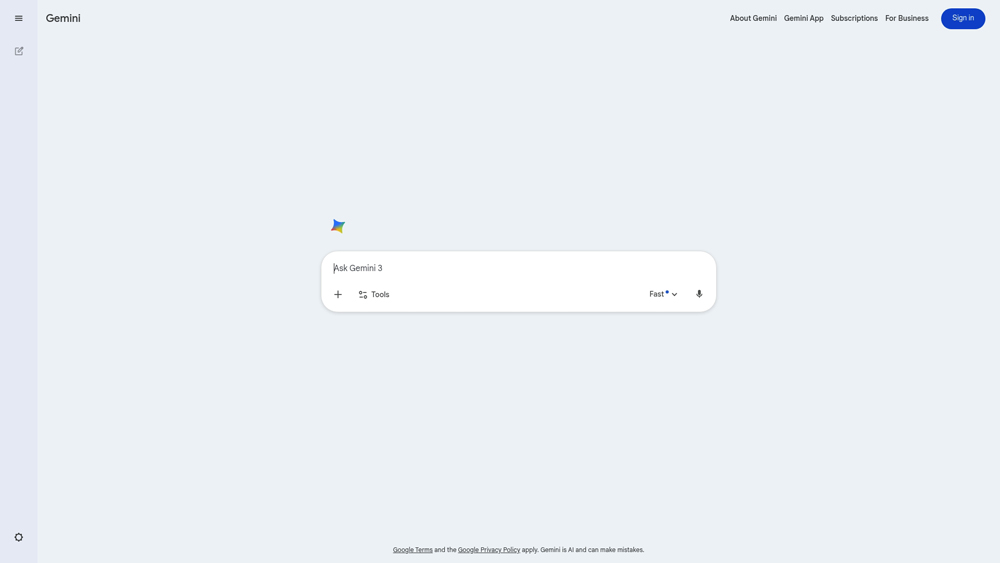
Google Gemini is an advanced, multi-modal AI assistant developed by Google that leverages the power of the Gemini family of models. It is available on the web, through a dedicated mobile app, and natively integrated into the Google ecosystem. Users interact through text, voice, and image to get real-time answers, generate creative content, summarize information from their Drive or Gmail, and automate complex tasks. The platform supports uses from casual questions to complex research and code execution.
2026 In-Depth Review & Model Analysis
Google Gemini 3 is no longer just a chatbot; it is a sophisticated reasoning engine integrated directly into the world’s most used productivity suite. Powered by the Gemini 3 family (Flash, Pro, and Ultra), it excels at ‘Agentic’ tasks, where the AI doesn’t just suggest text but executes multi-step workflows across Gmail, Docs, and Search. Our 2026 analysis focuses on its massive 1M+ token context window and its new ‘Deep Think’ mode, evaluating its performance for enterprise-scale research and software development.
Key Takeaways: Pros, Cons & Quick Summary
This summary highlights why Gemini 3 remains a top-tier choice for power users, while noting the specific trade-offs of the Google-centric approach.
Key Advantages (Pros)
- Agentic Workspace Actions: Can proactively draft, organize, and execute tasks across Gmail, Drive, and Calendar in a single chain.
- 1M Token Native Context: Effortlessly analyzes 1,500+ page documents or entire codebases without losing focus or needing RAG workarounds.
- Deep Think Reasoning: A specialized mode for high-stakes math, logic, and coding that mimics human-like contemplation for higher accuracy.
- Fact-Check Integration: The ‘Double-Check’ feature uses Google Search to highlight verified claims, significantly reducing hallucination risks.
- Advanced Video/Audio Analysis: Leading performance in ‘reading’ video files and transcribing multi-speaker audio with extreme precision.
Potential Drawbacks (Cons)
- Ecosystem Lock-in: Most powerful features (like Extensions) require your data to be within the Google ecosystem to reach full potential.
- Ultra Model Costs: The highest-tier reasoning and coding agents (Jules) are reserved for the most expensive Premium/Ultra plans.
- Complex Settings: The move toward agentic AI has added more menus and toggles, which may feel overwhelming for casual users.
Core Features: Gemini 3’s Native Ecosystem & Agentic Power
Google Gemini 3 represents a shift from a reactive chatbot to a proactive AI partner. By leveraging Google’s full technological stack, it offers a level of workspace integration that rivals cannot match. For 2026, we’ve highlighted the features that define its “Professional Grade” status: agentic execution, massive context handling, and native workspace automation.
-
Proactive App Extensions: Gemini doesn’t just “read” your Gmail or Drive; it can now execute multi-step actions, such as drafting an entire project proposal in Docs based on a thread in Gmail and then scheduling the follow-up in Calendar—all in one prompt.
-
Agentic Coding & Python Execution: With the integration of the Jules agent, Gemini can now handle asynchronous coding tasks. It runs its own Python sandbox to clean datasets and create interactive visualizations, which can be exported directly to Google Sheets.
-
True Native Multimodality: Unlike “bolted-on” systems, Gemini 3 was trained jointly on video, audio, and text from day one. This allows for ‘Gemini Live’—a real-time voice experience where you can share your camera to have the AI troubleshoot hardware or critique a live presentation.
-
The 1-Million Token Standard: Long-context processing is now standard across the Gemini 3 family. This allows users to drop entire 1,500-page technical bibles or 50,000 lines of code into the chat for instant, high-fidelity reasoning and retrieval.
-
Deep Research Mode: A specialized workflow that uses Gemini 3 Pro to perform multi-step web searches, synthesize conflicting sources, and generate a comprehensive 10-page report with citations in minutes.
Gemini 3 Model Hierarchy: Flash, Pro, and Deep Think
In 2026, choosing the right model is about balancing “Thinking Budget” with speed. The Gemini 3 architecture utilizes a Sparse Mixture-of-Experts (MoE) design to ensure that even the most complex reasoning remains lightning-fast.
- Gemini 3 Flash: The new default. It provides PhD-level reasoning at a fraction of the cost and latency of previous generations. It is the go-to model for high-frequency tasks like summarization and quick coding fixes.
- Gemini 3 Pro: The flagship for complex problem solving. It excels in agentic workflows where the AI must plan, execute, and verify its own work. This is the model powering the “Deep Research” and “Vibe Coding” experiences.
- Deep Think Reasoning: A specialized mode that generates “hidden reasoning tokens” before answering. This is fundamentally different from standard prompting; it allows the model to “mull over” a math or logic problem to ensure near-zero error rates in high-stakes environments.
Platform UX: Speed, Stability & Verification
Google has refined the Gemini UX to be as invisible as possible, focusing on a “conversational first” design that works across all devices.
- Bimodal Response Latency: Users can now toggle between ‘Instant’ (Flash) and ‘Deep’ (Pro/Think) modes. For most interactions, responses appear near-instantaneously, while complex logic steps show a real-time “thinking” progress bar.
- Double-Check Integration: A standout for reliability, the ‘Google Search’ button cross-references AI claims against the live web. It highlights verified text in green and unverified text in red, significantly reducing the “hallucination anxiety” common in other LLMs.
- Mobile Live Integration: The Gemini mobile app (iOS/Android) now supports full screen-sharing capabilities. This allows the AI to “see” what you are doing in other apps and provide contextual help, making it a true cross-app assistant.
Google Gemini: 2026 Subscription Tiers
In 2026, Gemini’s pricing is structured around Reasoning Levels and Context Capacity. Whether you need a fast assistant for daily tasks or a high-end reasoning engine for software engineering, there is a dedicated tier. All paid plans now include Deep Research and the Imagen 3 creative suite as standard.
GEMINI FREEMost Popular$0
- Price: $0/mo
- Model: Gemini 3 Flash
- Core: Standard Search Grounding, Multimodal Chat, and Mobile Voice
- Best For: Students and casual personal use.
BUSINESSMost Popular$20
- Price: $20/user
- Model: Gemini Business
- Core: Enterprise Security, Meeting AI (Note-taking), and Team Collaboration
- Best For: Small teams and startups.
AI ULTRAMost Popular$249.99
- Price: $249.99/mo
- Model: Gemini 3 Ultra
- Core: Highest API Limits, Jules Coding Agent, and 30TB Storage
- Best For: Data Scientists and Developers
Note: Gemini 3 Ultra is a specialized flagship tier launched in late 2025 for elite performance and high-volume data storage. For most business users, the Gemini Business or AI Pro tiers offer the best balance of cost and utility. Check your Workspace Admin Console for specific regional business pricing.
Product Details
Google Gemini 3 represents the pinnacle of “integrated intelligence.” By moving beyond simple chat and into agentic task execution, it provides a seamless experience for anyone already invested in the Google ecosystem. It is our top recommendation for users who value speed, multimodal depth, and native data security.
Platforms Supported
- Cloud / Web
- Android (Native)
- iOS (Native)
- ChromeOS
- Workspace (Docs/Sheets)
Training & Resources
- Gemini Academy
- Developer API Docs
Support
- 24/7 Priority (Premium)
- Community Forums
Prompt Colleague Score
Quick Facts
- Company: Google
- Founded: 1998
- Headquarters: Mountain View, USA
- Best For: Google Workspace & Creative Tasks
- Pricing Model: Freemium
- Free Tier: Yes
- Latest Model: Gemini 1.5 Pro
- Official Site: gemini.google.com
Pricing & Access
- Free Tier: Web & Mobile Access
- Gemini Advanced: $20 per month
- Google Workspace: Enterprise Add-on
- Best Value: Gemini Advanced (for power users)
- API Access: Yes (Google AI Studio)
Frequently Asked Questions (FAQ)
Gemini 1.5 Ultra is the most advanced, enterprise-grade model, offering vastly superior reasoning, a massive context window (up to 1 million tokens), and the highest performance for complex, multi-modal tasks. Gemini Pro is a highly capable model optimized for speed and efficiency, powering the free tier and general interactions.
Yes, a robust free tier is available using the powerful Gemini Pro model. The main limitations compared to the Advanced tier are reduced usage caps, slower speeds during peak times, and lack of deep, native integration with Google Workspace applications (like Gmail and Drive).
Gemini can natively process and summarize large files uploaded from your device or Google Drive (such as PDFs, documents, videos, and spreadsheets). It can also perform complex data analysis and code execution in a secure environment to provide deep, actionable insights from your uploaded data.
Yes, in general, users retain the rights to the content they generate, which can be used commercially. For serious business applications, Google’s AI Premium (Advanced) or Enterprise Workspace plans offer clearer legal indemnity, contractual terms, and enhanced data security.
Gemini Extensions allow the model to natively connect with other Google services, acting as a real-time agent. For instance, it can summarize emails from Gmail, find files in Drive, plan trips using Flights/Maps, or quickly create spreadsheets in Sheets based on a chat request. This automation dramatically increases professional efficiency.
Yes, one of Gemini’s core strengths is its native, real-time access to Google Search. This ensures that answers are not limited by a static knowledge cut-off date but are relevant and up-to-the-minute, providing a significant edge in research and factual queries.
Artificial Intelligence (AI) API & Enterprise Access
The true power and professional utility of Google Gemini extend far beyond the browser and consumer-facing apps. The Google AI API and Vertex AI platform provide direct, programmatic access to the entire family of Gemini models (including Gemini 1.5 Pro and Ultra) as a versatile building block for custom software and enterprise solutions. The API is essential for businesses requiring massive scale, guaranteed data residency, and seamless integration into the Google Cloud ecosystem.
Developers use these customizable endpoints to build proprietary AI-powered applications, automate complex MLOps workflows, and integrate state-of-the-art language processing directly into their internal systems like CRM, support desks, and marketing platforms, all while leveraging Google’s enterprise-grade security and governance features.
Artificial Intelligence:
- Chatbot
- For Healthcare
- For Sales
- For eCommerce
- For Finance
- For Marketing
- For Customer Service
- AI Developer Tools
- Document Management
- E-Commerce Management
- Education
- Predictive Modeling
Chatbot:
- AI Agent
- Customer Engagement
- Document Processing
- Image Recognition
- Mobile Support
- Multi-Language
- Natural Language
- Predictive Analytics
- Reporting
- Sentiment Analysis
- Speech Recognition
- Text-to-Speech
Conversational AI:
- AI Assistant
- Chatbot
- Content Generation
- Conversational Interface
- Multi-Language Support
- Predictive Analytics
- Sentiment Analysis
- Speech Recognition
- Text-to-Speech
- Voice Commands
- Virtual Assistant
Natural Language Generation:
- Abstractive Summarization
- Automated Content Generation
- Grammar Check
- Text Generation
- Language Translation
- Multi-Language Support
- Paraphrasing
- Plagiarism Check
- Report Generation
- Sentiment Analysis
- Stylistic Text Transfer
- Tone Adjustment
Natural Language Processing:
- Contextual Analysis
- Document Classification
- Feature Extraction
- Keyword Extraction
- Named Entity Recognition
- Natural Language Generation (NLG)
- Open Source Integrations
- Parsing
- Part-of-Speech Tagging
- Sentiment Analysis
- Text Categorization
- Text Extraction
Product Features In Detail:
Beyond its core chat interface, Google Gemini functions as a robust, multi-modal suite of specialized tools, deeply integrated within the Google ecosystem. This comprehensive FAQ section provides in-depth answers and specific use-case descriptions that demonstrate how professionals leverage Gemini for tasks, including real-time research, data analysis, code execution, and native Workspace automation. These details are essential for maximizing the platform’s value across various business roles.
Beyond simple syntax, Gemini 3 understands the underlying intent of code. This allows for fluid translation of complex logic between entirely different ecosystems, such as migrating a legacy COBOL backend to a modern Python microservice while preserving business rules.
Gemini doesn’t just suggest fixes; it acts as an architectural consultant. It analyzes entire repositories via its 1M token window to identify “code smells,” suggests refactoring paths to reduce technical debt, and ensures that optimizations actually adhere to your team’s specific style guides.
Acting as a proactive partner rather than a passive tool, Gemini provides real-time debugging and “Deep Think” reasoning to solve architectural bottlenecks. It can explain the ‘why’ behind a crash and suggest multiple alternative patterns, accelerating the SDLC for both juniors and senior leads.
Leveraging its ability to ingest massive context, Gemini synthesizes technical manuals and long-form reports from raw data. It’s particularly effective at maintaining structural coherence across 100+ page documents, ensuring that technical specifications remain consistent with the actual codebase.
Rather than generic sales copy, Gemini maps out “persuasion architecture” for landing pages and email funnels. It uses psychographic triggers specific to your brand voice, ensuring that marketing messaging feels human and strategically aligned with different stages of the customer journey.
Using the integrated Imagen and Veo models, Gemini transforms text into high-fidelity images and video. It supports iterative, turn-based editing—meaning you can ask to “change the lighting” or “swap the character’s outfit” in a natural conversation without starting over.
For creative teams, Gemini functions as a story architect. It can maintain consistent character bibles and complex plot timelines across a series of scripts or novels, helping to break writer’s block by suggesting divergent narrative paths that stay true to the established ‘world’ logic.
This is Gemini’s standout “1M Token” advantage. It can condense thousands of pages of legal filings, medical research, or hours of meeting transcripts into precise summaries. You can query the data directly, asking for specific takeaways like “summarize only the financial risks mentioned in Part 3.”
As a core text engine, Gemini 3 has moved past “AI-speak.” It masters subtle linguistic nuances, allowing users to toggle between academic rigor, casual social hooks, or high-level executive summaries with a focus on factual accuracy and reduced hallucination rates.
Gemini features a built-in Python sandbox for “Code Execution.” You can upload raw CSVs or spreadsheets, and the model will write and run its own code to clean data, identify trends, and render interactive visualizations and graphs directly within the interface.
The Top 4 AI Tools: Our Editors' Picks for Instant Productivity!
ChatGPT
AI Assistants
Google Gemini
AI Assistants

Midjourney
Image Generators
Otter.ai
Meeting Assistants