

Amazon Alexa Review 2026: The New Era of Generative Smart Living
Amazon Alexa is a world-leading AI voice assistant that has evolved into a sophisticated generative AI platform. By leveraging Amazon’s custom Large Language Models, it now offers “Remarkable Alexa” capabilities that go beyond simple commands to provide fluid, human-like reasoning and complex automation. It is accessible across millions of Echo devices, Fire TV, and mobile apps, serving as the central nervous system for modern smart homes. You can interact through natural voice dialogue to manage your life, control thousands of smart devices, and now generate creative content or solve complex multi-step problems. The platform bridges the gap between digital utility and physical automation, making it a unique powerhouse in the AI assistant landscape.
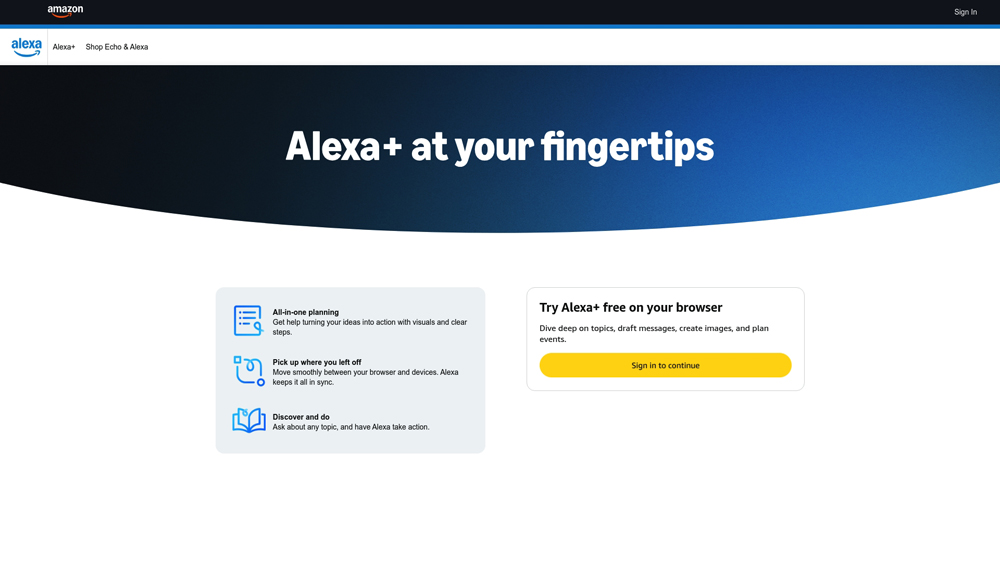
In-Depth Review & Model Analysis
Amazon has supercharged Alexa with a bespoke LLM architecture specifically tuned for low-latency voice interaction and smart home orchestration. We evaluate its primary strengths across the new generative dialogue capabilities, the breadth of its “Skill” ecosystem, and the hardware-software synergy that defines the Echo experience. This analysis explores how the “Remarkable Alexa” tier stacks up against pure software competitors.
Key Takeaways: Pros, Cons & Quick Summary
This quick summary highlights the benefits of Alexa’s ecosystem and the considerations for users moving to the generative AI tiers.
Key Advantages (Pros)
- Best-in-Class Smart Home: Unrivaled control over thousands of devices with complex, automated routines.
- Generative Dialogue: New LLM integration allows for conversational fluidly and follow-up questions without wake words.
- Hardware Ubiquity: Available in every room through affordable Echo devices and high-end smart displays.
- Eco-system Synergy: Deep integration with Amazon Prime, Music, and Audible for a unified media experience.
- Proactive Intelligence: Features like “Hunches” let Alexa anticipate your needs based on your habits.
Potential Drawbacks (Cons)
- Subscription Fatigue: Advanced generative features (“Remarkable Alexa”) require a separate monthly fee.
- Privacy Trade-offs: Maintaining an “always-listening” device in private spaces remains a concern for some users.
- Skill Quality Variance: Third-party skills can be hit-or-miss in terms of reliability and user interface.
Core Features: Generative AI & Smart Home Orchestration
Alexa has transitioned from a command-and-control interface to a proactive AI partner. What this really means is that Alexa now understands context, tone, and multi-step requests, making it the most sophisticated voice-first platform on the market.
-
Generative AI Conversations: The latest Alexa LLM enables natural, flowing dialogue. You can brainstorm gift ideas, plan a trip, or write a poem through simple voice interaction.
-
Advanced Home Automation: Alexa orchestrates hundreds of smart home brands, using AI to manage lighting, security, and climate based on your presence and time of day.
-
Visual Echo Show Experience: On screen-enabled devices, Alexa provides multi-modal feedback with functions as showing recipes, security feeds, and calendar data alongside voice responses.
-
Proactive Hunches & Guard: Using AI to detect patterns, Alexa can notify you if you left the front door unlocked or even detect the sound of breaking glass or smoke alarms.
-
Unified Shopping & Media: Seamless voice-to-door shopping via Amazon.com and instant access to the world’s largest library of audiobooks and music.
Model Architecture & Voice Innovation
Understanding the Alexa LLM is key to seeing how it differs from ChatGPT. Amazon’s model is optimized for “action-oriented” intelligence, it doesn’t just want to talk; it wants to do things for you in the physical world.
- Remarkable Alexa Tier: This premium generative model offers the highest level of reasoning and personal context. It learns your preferences over time, recognizing individual family members by voice and adapting its personality to match your household’s vibe.
- Edge Processing: For many tasks, Alexa uses on-device processing to ensure lighting fast response times and enhanced privacy, only sending complex generative queries to the cloud when necessary.
- Low-Latency Interaction: Amazon has prioritized speed, ensuring that voice responses feel near-instant, which is crucial for maintaining the illusion of a natural conversation.
Performance, Speed & User Experience (UX)
Our testing focuses on how well Alexa understands accents, handles background noise, and executes complex smart home routines. The UX is defined by the “frictionless” nature of voice control.
- Voice Recognition Accuracy: Alexa leads the industry in far-field voice recognition, accurately capturing commands even across large rooms or over loud music.
- Multimodal UX: The integration between voice and screen (on Echo Show) is the gold standard for home AI, allowing you to transition from hearing a news summary to watching a video report seamlessly.
- Reliability: In terms of uptime and consistency in smart home execution, Alexa remains the most reliable ecosystem for professional-grade home automation.
Amazon Alexa AI: 2026 Subscription Tiers
The latest Alexa LLM provides “human-level” dialogue for home management and creative tasks. With a massive library of over 100,000 Skills, integrated Matter support, and advanced AI vision capabilities, it remains the most versatile physical AI assistant for modern households.
ALEXA CLASSICMost Popular$0
- Price: $0/mo
- Style: Reactive Assistant
- Core: Standard Timers Plus Music Playback and General Local News
- Best For: Basic Echo Users and Casual Smart Home Beginners
PLUS (NO PRIME)Most Popular$19.99
- Price: $19.99/mo
- Style: Advanced AI (Nova)
- Core: Document Uploads Plus Photo Analysis and Full Private Security
- Best For: Non-Prime Households and Serious Privacy Seekers
ALEXA STUDIOMost Popular$29.99
- Price: $29.99/mo
- Style: Multi-Modal Creator
- Core: AI Video Search Plus Image Generation and Advanced Creative Work
- Best For: Fire TV Power Users and Creative Echo Show Families
Note: Advanced AI features are now part of the Alexa+ subscription; while currently complimentary for Amazon Prime members, non-Prime users are billed at the standard $19.99/month rate. Certain “Agentic” capabilities, such as automated service bookings via Yelp or Expedia, may require linked third-party accounts. Pricing and feature availability for older Echo hardware are subject to change; please check your Amazon “Memberships & Subscriptions” portal for the most accurate localized rates.
Product Details
Alexa acts as the central nervous system of the modern smart home. While other assistants live primarily on your phone, Alexa’s deep hardware integration makes it the most capable choice for ambient, hands-free automation. It is our top recommendation for families and tech enthusiasts who want their physical environment, from lighting to security, to react instantly to their voice.
Platforms Supported
- Echo Devices
- Fire TV / Tablets
- iOS & Android App
- Windows (PC)
- Built-in (Cars/Appliances)
Training
- User Guides
- In-App Tutorials
Support
- 24/7 Phone/Chat
- Community Forums

Prompt Colleague Score
Quick Facts
- Company: Amazon
- Best For: Proactive Smart Home & Lifestyle Management
- Primary AI: Alexa LLM (Multi-Agent Orchestration)
- Latest Feature: Alexa.com Web Assistant (Jan 2026)
- Hardware: Echo AZ3/AZ3 Pro Chips (Optimized for AI)
- Partner Ecosystem: Expedia, BMW, Samsung, Bosch Integration
- Official Site: amazon.com/alexa
Pricing & Access (2026)
- Alexa Classic: $0 (Basic commands & timers)
- Alexa+: Free for Amazon Prime Members
- Alexa+ Standalone: $19.99/mo (For non-Prime users)
- Prime Membership: $139/year (Best way to access AI features)
- Note: Early Access phase ended Jan 2026.
Frequently Asked Questions (FAQ)
The Alexa LLM is Amazon’s latest flagship model designed specifically for voice interaction. It makes Alexa more conversational, allowing it to understand nuances, handle follow-up questions without a wake word, and generate complex ideas or text through voice.
Yes, while standard Alexa remains free with your hardware, the “Remarkable Alexa” tier is a paid subscription. This monthly fee unlocks the full power of the generative AI model for more personalized and sophisticated interactions.
Alexa devices use wake-word detection to ensure they only record when addressed. Amazon provides physical mute buttons, a camera shutter on Show devices, and a privacy hub where you can view or delete your voice recordings at any time.
Alexa supports over 140,000 devices from thousands of brands. With the inclusion of Matter and Zigbee support in newer Echo hardware, Alexa acts as a universal hub for nearly all modern smart home ecosystems.
Yes, through Voice ID, Alexa can recognize who is speaking. This allows for personalized responses, such as accessing your specific calendar, music preferences, or shopping lists without interfering with others in the household.
Most Alexa functions require the internet to access the cloud LLM. However, many newer Echo devices support “Local Voice Control,” allowing you to manage basic smart home commands even if your internet goes down.
Alexa serves as the central brain for your home, managing routines that trigger based on time, location, or AI-detected events like a door opening.
With the new LLM, you can have back-and-forth discussions about everything from dinner plans to bedtime stories, all without repeating the wake word.
On screen-enabled devices, Alexa combines voice with high-definition visuals, allowing you to see security feeds, recipes, and video calls in real-time.
Access over 100,000 third-party skills that extend Alexa’s power into niche areas like fitness, meditation, gaming, and banking.
Alexa uses AI to learn your habits and proactively suggests actions, like turning off lights you forgot or alerting you to unusual home activity.
Stay connected from the car to the kitchen. Alexa is integrated into mobile apps, smart appliances, and even the Fire TV interface.
Amazon Alexa Development & Smart Home APIs
The professional utility of Amazon Alexa extends far beyond consumer Echo devices through the Alexa Skills Kit (ASK). This framework provides direct, programmatic access to Alexa’s voice-first ecosystem, serving as a versatile building block for developers to create custom voice experiences and enterprise smart home solutions. The API is essential for brands requiring massive scale, low-latency voice responses, and deep integration with physical hardware and IoT environments.
Developers use the Alexa AI Action SDK to build proprietary AI-powered voice skills, automate complex smart home routines, and integrate state-of-the-art Natural Language Understanding (NLU) directly into their own hardware. This robust infrastructure ensures Alexa remains the foundational core of modern, ambient AI solutions across hospitality, healthcare, and residential industries.
Artificial Intelligence:
- Voice Chatbot
- For Smart Healthcare
- For Retail/Shopping
- For Hospitality
- Multilingual NLU
- Natural Language Processing
- Smart Home Automation
- Virtual Personal Assistant
- Machine Learning
- Predictive Analytics
- Rule-Based Routines
- Visual Generative AI
Chatbot & Voice Interaction:
- Automated Learning
- Natural Language Understanding
- Sentiment Detection
- Voice Command Trigger
- Context Awareness
- Human Agent Takeover
- Multimedia Playback
- Shopping Integration
- Financial Prediction
- Skill Blueprints
- Usage Analytics
- Multi-App Integration
Conversational AI & Ambient Intelligence:
- Intent Recognition
- Global Language Support
- Multimodal Display
- Pre-built Home Skills
- Acoustic Event Detection
- No-Code Blueprints
- Proactive Guidance
- Developer SDKs
- Cross-Device Sync
- Reusable Code Modules
- Speech Recognition
- Neural Text-to-Speech
- Personalized Assistant
Natural Language Generation (NLG):
- Conversational Responses
- Information Retrieval
- Storytelling & Entertainment
- Business Report Writing
- Smart Briefing Summaries
- Shopping Reminders
- Complex Document Drafting
- Translation Services
Natural Language Processing (NLP):
- Phonetic Processing
- Keyword Spotting
- Multi-turn Dialogue
- In-Database Analytics
- Entity Extraction
- Language Generation (NLG)
- Matter/Zigbee Integration
- Semantic Parsing
- Part-of-Speech Tagging
- Real-time Translation
Product Features In Detail:
Beyond its role as a simple voice assistant, the new generative Alexa functions as a robust orchestrator for daily life and smart environments. This comprehensive FAQ and feature section provides in-depth answers and specific use-case descriptions that demonstrate how households and businesses leverage Alexa+ for specialized tasks, including home automation, multi-step planning, ambient sensing, and proactive assistance. These details are essential for maximizing the ecosystem’s value across diverse environments.
The standard Alexa experience remains free, but the advanced ‘Alexa+’ tier requires a subscription (included for Prime members) to access the new Large Language Model capabilities.
Alexa uses on-device wake word detection and provides a physical microphone-off button on Echo devices to ensure your conversations are only processed when intended.
Yes, Echo devices with built-in Zigbee, Matter, or Sidewalk hubs can control compatible smart home devices locally even if the cloud connection is temporarily lost.
Amazon has launched a web-based portal that allows users to interact with Alexa via text, manage complex routines, and upload files for the AI to analyze and summarize.
With the new generative model, you can give complex commands like ‘Alexa, dim the lights, start the news, and preheat the oven’ in a single sentence.
Non-technical users can use ‘Skill Blueprints’ to create personalized responses, while developers use the Alexa Skills Kit (ASK) for professional application building.
Yes, ‘Voice ID’ allows Alexa to recognize different family members, providing personalized calendars, music preferences, and shopping lists for each person.
Alexa is a founding supporter of the Matter standard, ensuring that most new smart home devices from any brand can be controlled via the Alexa app or voice.
The upgraded Alexa+ model uses high-level reasoning to handle complex queries, follow-up questions, and creative tasks like writing poems or planning travel itineraries.
Advanced Echo devices use ultrasound and Wi-Fi radar to detect human presence, allowing Alexa to proactively turn off lights or adjust thermostats when a room is empty.
Select Echo devices act as universal smart home controllers, bridging thousands of third-party devices into a single, cohesive voice-controlled ecosystem.
Alexa can now coordinate between different third-party services (like OpenTable and Uber) to complete complex tasks like booking a dinner and a ride simultaneously.
On Echo Show devices, the UI provides custom visual widgets for smart home control, calendars, and live camera feeds that update in real-time as you approach.
Alexa can now trigger routines based on sound events, such as a baby crying or glass breaking, or based on your proximity to home via GPS geofencing.
The assistant uses advanced neural models to produce a more expressive, human-like voice that can change its tone based on the content of the conversation.
Specialized APIs allow property managers to deploy Alexa at scale across hotels and senior living facilities with centralized management and privacy controls.
The Top 4 AI Tools: Our Editors' Picks for Instant Productivity!

ChatGPT
AI Assistants

Google Gemini
AI Assistants

Midjourney
Image Generators

Otter.ai
Meeting Assistants