

CrewAI Review 2026: Orchestrating Collaborative AI Agent Teams
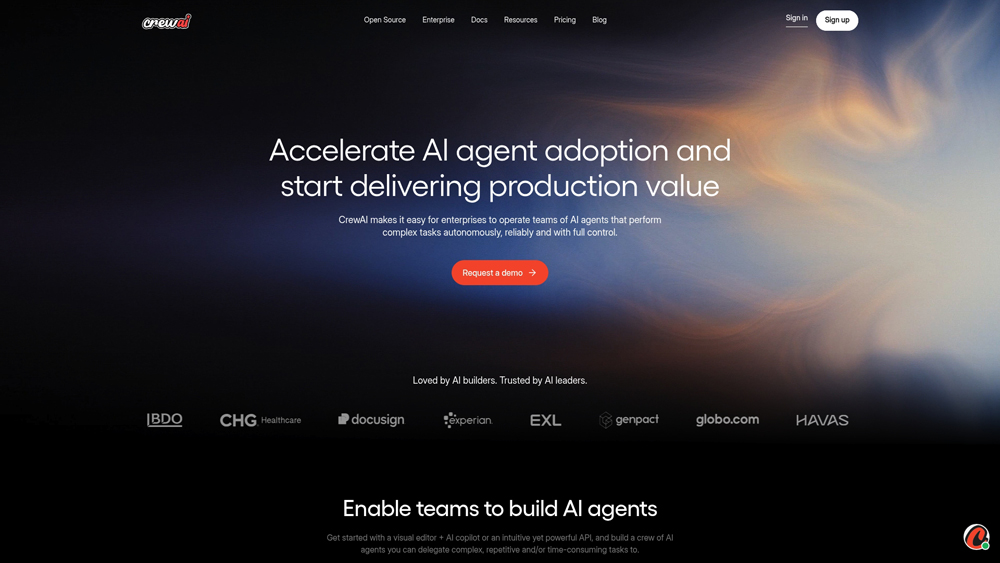
CrewAI is a leading multi-agent framework designed to orchestrate role-playing collaborative AI agents. By assigning specific roles, goals, and tools to individual agents, CrewAI enables them to work together to solve complex problems that go beyond the capabilities of a single LLM. It focuses on “process-driven” AI, allowing users to define sequential, hierarchical, or consensual workflows for diverse tasks like market research, content strategy, and software engineering.
In-Depth Multi-Agent Analysis
CrewAI has redefined the architecture of task automation. Instead of relying on a single large context window, it utilizes specialized agents that communicate and hand off tasks. We evaluate its performance based on its ability to manage agent interaction, its seamless integration with LangChain tools, and its production-ready deployment via CrewAI+ Cloud.
Key Takeaways: Pros, Cons & Quick Summary
This summary highlights the operational efficiency and potential learning curve of implementing CrewAI for autonomous enterprise workflows.
Key Advantages (Pros)
- Sophisticated Role-Playing: Allows for nuanced agent personalities that focus strictly on their specific task goals.
- Flexible Workflow Processes: Supports sequential, consensual, and hierarchical management styles for agent teams.
- Native Tool Integration: Built-in support for any LangChain tool, enabling web search, file writing, and API calls.
- Self-Healing Logic: Agents can recognize errors in their own output or tool calls and attempt to fix them autonomously.
- Model Agnostic: Works seamlessly with OpenAI, Anthropic, or local models via Ollama for private deployments.
Potential Drawbacks (Cons)
- Token Consumption: Multi-agent communication can lead to high token usage as agents “talk” to each other frequently.
- Latency: Multi-step tasks involving several agents take longer to complete than simple direct prompts.
- Orchestration Complexity: Requires clear logic and prompt engineering to prevent agents from getting stuck in loops.
Core Features: Multi-Agent Orchestration & Role-Based Automation
CrewAI offers a sophisticated framework for managing autonomous AI agents that work together as a cohesive unit. We focus on the high-impact features for developers and enterprise architects, including role-based agent design, hierarchical process management, and seamless tool integration.
-
Role-Based Agent Design: The ability to define agents with specific roles, backstories, and goals ensures that each “crew member” operates within its domain of expertise, leading to high-quality specialized outputs.
-
Custom Tool Integration: Agents can be equipped with specific tools for web searching, data processing, or API interaction, allowing them to perform real-world actions beyond simple text generation.
-
Process-Driven Workflows: Define how agents interact using sequential, hierarchical, or consensual processes, enabling the automation of complex business operations that require multi-step reasoning.
-
Short-Term & Long-Term Memory: CrewAI features a robust memory system that allows agents to retain context within a single execution and learn from previous tasks to improve future performance.
-
Self-Healing Logic: The framework supports “guardrails” where agents can identify their own errors or tool failures and autonomously attempt to correct their path to achieve the final objective.
Orchestration Architecture and Framework Innovation
Understanding the underlying orchestration logic of CrewAI is critical to assessing its efficiency. The innovation lies in how it manages “conversational overhead” and task delegation, ensuring that agent teams are productive rather than just chatty.
- Manager Agent Capability: By utilizing a ‘Manager’ role, the framework can autonomously delegate tasks, manage the internal timeline, and review agent outputs for quality before the final delivery.
- Model Agnostic Integration: CrewAI allows you to mix and match models (e.g., GPT-4o for the Manager and Llama-3 for workers), optimizing both cost and performance across different stages of a project.
- Stateful Flow Management: The introduction of ‘Flows’ provides a structured way to manage complex states, allowing for conditional branching and loops within the agentic automation cycle.
Scalability, Reliability & Developer Experience (DX)
Performance testing in multi-agent systems focuses on task completion rates, the accuracy of tool usage, and the stability of the orchestration layer under high-complexity requirements.
- Task Completion Reliability: CrewAI excels at ensuring tasks reach a “Finished” state. Its ability to handle ambiguous instructions by allowing agents to ask each other for clarification is a primary strength.
- Developer Tooling & CLI: The framework provides a clean CLI for initializing projects, managing dependencies via Poetry, and deploying “Crews” to the cloud via the CrewAI+ platform.
- Observability & Tracing: Integration with tools like LangChain’s LangSmith allows developers to trace exactly how agents are communicating, making it easier to debug and optimize prompt sequences.
CrewAI Access & Value (2026)
CrewAI offers an Open Source framework for developers while providing CrewAI+ for businesses that need cloud hosting, training, and observability. It is the premier tool for building autonomous multi-agent teams that can handle end-to-end business operations with minimal human intervention.
OPEN SOURCEBuild Locally$0
- Price: Free (MIT)
- Access: Core SDK & APIs
- Limits: Self-Hosted
- Best For: Individual Developers
CREWAI+ PROScale Operations$99
- Price: $99/mo
- Compute: Advanced Tracing
- Features: Priority Support
- Best For: Growing Startups
ENTERPRISECustom SolutionsQuote
- Price: Custom
- Privacy: Dedicated Infra
- Admin: SSO & Compliance
- Best For: Large Corporations
Note: CrewAI framework is open-source, but cloud-based features and enterprise support via CrewAI+ are subject to subscription costs. Prices may vary based on model choice (GPT-4 vs Llama) and the volume of automated tasks executed. Verify latest terms at crewai.com.
Product Details
CrewAI is a highly recommended solution for those looking to build sophisticated, multi-step AI systems. It provides the necessary structure to turn disparate LLM calls into a cohesive, goal-oriented team.
Platforms Supported
- Python (SDK)
- JavaScript (via API)
- Cloud (CrewAI+)
- Local Hosting
- Docker
Training
- Documentation
- Community Tutorials
- Enterprise Onboarding
Support
- Discord Community
- GitHub Issues
- Priority Support (Pro)

Prompt Colleague Score
Quick Facts
- Company: CrewAI Inc.
- Founded: 2023
- Headquarters: Middletown, DE
- Best For: Role-Based Automation
- Programming: Python / No-Code Studio
- Latest Version: v1.8.x (Jan 2026)
- Official Site: crewai.com
Pricing & Access
- Open Source: MIT License (Free)
- Professional: $25 per month
- Scale: $0.50 per execution
- Enterprise: Custom (VPC/SLA)
Frequently Asked Questions (FAQ)
Crews are teams of autonomous agents with specific roles and backstories designed to collaborate on complex tasks. Flows provide the overarching state management and event-driven control logic, acting as the ‘scaffolding’ that triggers and connects multiple Crews into a production-ready application.
CrewAI is primarily an open-source Python framework that is free to download and use. However, the CrewAI Enterprise (AMP) platform has a paid tier for hosting, monitoring, and scaling. Use of the framework itself is free, but you must pay for the underlying LLM API calls (e.g., OpenAI, Anthropic, or Groq) unless using local models.
Yes, CrewAI is model-agnostic and supports local LLMs via integrations like Ollama or LM Studio. This is ideal for privacy-sensitive industries (Healthcare, Finance) where data must stay on local infrastructure while still benefiting from multi-agent orchestration.
While simple tasks use a ‘Sequential’ process, CrewAI supports ‘Hierarchical’ processes where a Manager Agent or LLM coordinates task delegation. Additionally, the ‘Flows’ architecture allows for conditional branching, loops, and parallel execution to handle complex business logic.
Tools are specific capabilities you give to agents, such as the ability to search the web (Serper), read a database (MySQL/PostgreSQL), or execute Python code. CrewAI provides a native toolset, but developers can easily create custom tools for any internal API or software.
Yes, CrewAI allows for human intervention. You can configure tasks to require human approval before proceeding, enabling a ‘check-and-balance’ system where agents perform the heavy lifting and humans verify the final output quality.
Multi-Agent Orchestration APIs
The power of CrewAI extends into the enterprise via the CrewAI AMP (Agent Management Platform), providing programmatic access to deployed “Crews” through REST APIs. This allows businesses to integrate multi-agent logic directly into existing software stacks, moving beyond simple chatbot interfaces to autonomous agentic workflows. By exposing agent teams as API endpoints, organizations can automate complex, multi-step operations like market research, lead scoring, and financial auditing with production-grade reliability.
Developers leverage CrewAI’s modular architecture to build proprietary AI-driven systems that manage state, persist memory, and execute tools across global infrastructures. The platform’s native support for bidirectional Model Context Protocol (MCP) and secure tool repositories ensures that agent teams can securely interact with enterprise data and internal developer tools, making it the preferred choice for MLOps teams scaling autonomous agent systems in 2026.
Multi-Agent Automation:
- Role-Based Orchestration
- Multi-Agent Collaboration
- Autonomous Task Delegation
- Hierarchical Process Management
- Event-Driven Flows
- State Management & Persistence
- Human-in-the-Loop Support
- Agentic RAG Integration
- MCP Tool Support
- Custom Tool Development
- Parallel Execution
- Enterprise Security (AMP)
Agentic Framework:
- Autonomous Reasoning
- Goal-Oriented Planning
- Self-Correction Guardrails
- Role-Playing Personas
- Long-Term Contextual Memory
- Code Interpreter Tooling
- YAML-Based Configuration
- Visual Flow Builder
- Execution Monitoring
- Real-time Trace Logs
- PII Redaction for Traces
- Offline Model Support
Enterprise Workflows:
- Lead Scoring Agents
- Market Intelligence Crews
- HR Pipeline Automation
- Customer Support Agents
- Financial Compliance Crews
- Stateful Logic Branches
- Private Tool Repositories
- REST API Integration
- Managed Infrastructure
- Team Seat Management
- SOC 2 Compliance
- Onboarding Support
- Senior Support Access
Software Development:
- Python SDK
- CLI Tooling
- GitHub Integration
- Automated Code Reviews
- Technical Report Generation
- Logic Error Debugging
- Docker Integration
- Poetry Support
Data & Analytics:
- Vector DB Search
- SQL/NoSQL Integration
- Predictive Revenue Analysis
- Cross-Document Reasoning
- Automated Web Searching
- Sentiment Data Enrichment
- SEC Filing Analysis
- Market Trend Forecasting
- ROI Calculation Traces
- Usage Metrics Dashboard
CrewAI Framework Features In Detail:
Beyond simple role-playing, CrewAI functions as a high-performance orchestration layer designed for complex multi-agent systems. This detailed feature section explains how the framework handles the “heavy lifting” of agent communication, state management, and tool integration. These components are critical for developers building autonomous systems that require precision, collaboration, and scalability across enterprise environments.
CrewAI allows you to define agents with distinct ‘Roles’, ‘Goals’, and ‘Backstories’. This forces the underlying LLM to adopt a specific professional persona (e.g., ‘Senior Research Analyst’), which significantly improves focus and reduces hallucinations during complex multi-step tasks.
Unlike standard linear chains, CrewAI supports hierarchical workflows. A ‘Manager Agent’ can be assigned to oversee the crew, delegating tasks to specialists, reviewing their work for quality, and asking for revisions—simulating a real-world management structure.
Agents are equipped with sophisticated memory layers: short-term for immediate task context, and long-term (via RAG and vector databases) for persisting knowledge across different sessions. This ensures the “Crew” learns and remembers specific project details over time.
‘Flows’ allow developers to build structured, event-driven applications. You can define conditional logic (e.g., “if research is insufficient, retry with a different tool”), manage application state, and trigger multiple crews in a specific, reliable sequence.
CrewAI is not locked into any single provider. You can run one agent on GPT-4o, another on Claude 3.5, and a third on a local Llama 3 instance via Ollama. This flexibility allows you to balance cost, performance, and data privacy requirements.
For enterprise security, CrewAI supports private tool repositories with role-based access control. This ensures that agents only access authorized internal APIs, databases, or documentation, preventing unauthorized data exposure within autonomous workflows.
The framework includes built-in guardrails where an LLM can act as a judge to validate outputs. If a task result doesn’t meet specific criteria (e.g., word count, tone, or factual accuracy), the guardrail automatically sends feedback to the agent to fix the issue.
CrewAI Enterprise supports the Model Context Protocol (MCP), allowing agents to interact seamlessly with a vast ecosystem of standardized tools and data sources. This makes it easier to connect your AI teams to cloud services and developer environments.
The Top 4 AI Tools: Our Editors' Picks for Instant Productivity!
ChatGPT
AI Assistants
Google Gemini
AI Assistants

Midjourney
Image Generators
Otter.ai
Meeting Assistants